Measuring the ULEZ effect on London's air
- Quant Climate
- Policy,Air quality
- 18 May, 2026
When a city introduces a policy as significant as the Ultra Low Emission Zone (ULEZ), a natural question follows: did it actually work? Pollution levels move for all sorts of reasons — weather, traffic trends, the wider economy — so simply comparing “before” and “after” can be misleading.
The question
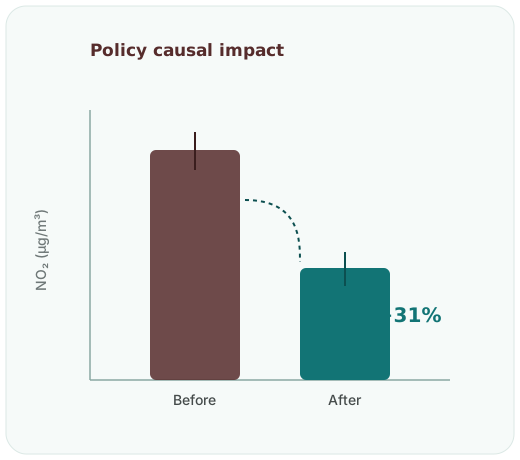
How much of the change in nitrogen dioxide (NO₂) across Greater London can be attributed to the ULEZ itself, rather than to everything else happening at the same time?
The approach
We framed this as a causal inference problem and built a Bayesian model that estimates the counterfactual — what pollution would have looked like had the zone never been introduced — and compares it against what was actually observed.
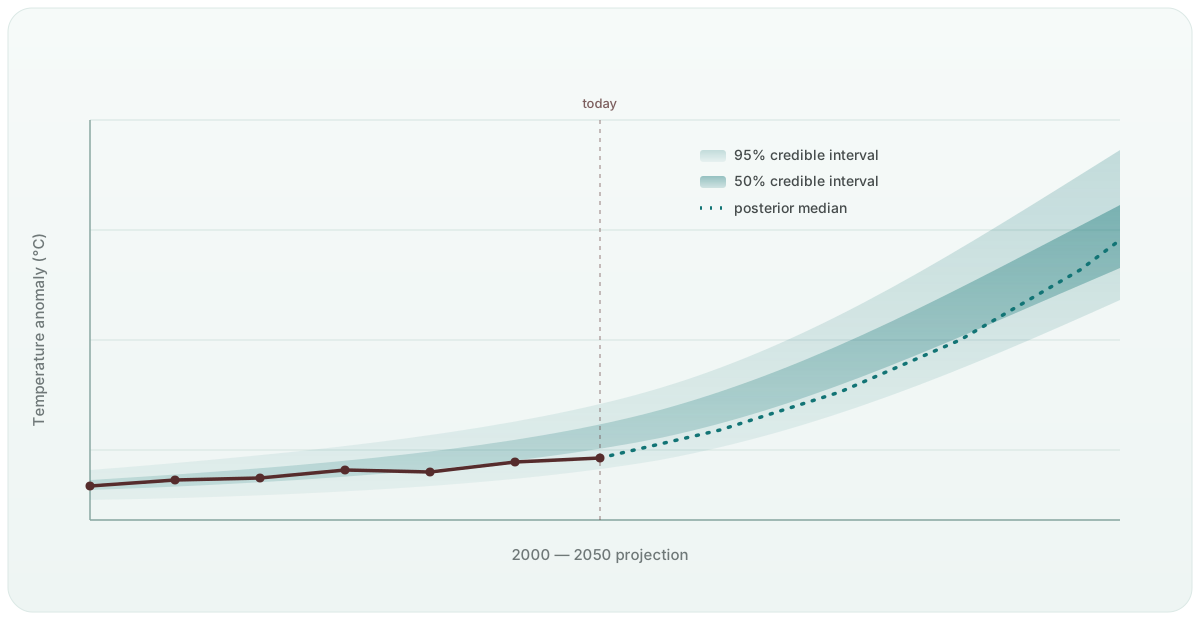
Because the model is Bayesian, it does not return a single headline number. It returns a full distribution over the likely effect size, so we can say not only how large the reduction was, but how confident we are in it.
Why it matters
For policymakers, that distinction is everything. A reduction that is large but highly uncertain calls for a different response than one that is modest but near-certain. By quantifying both the effect and the confidence around it, decision-makers can weigh the evidence honestly.
Interested in evaluating a policy or intervention? Get in touch.